


23 Apr Food Technology Classroom Top Design Tips for Schools | Klick Technology
The food technology classroom environment has a direct impact for teachers on how well lessons run, how safely practical work can be delivered and how engaged students feel in the subject.
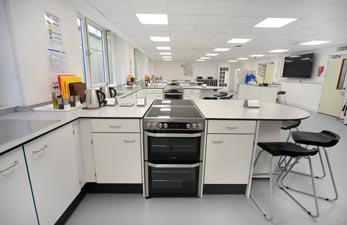
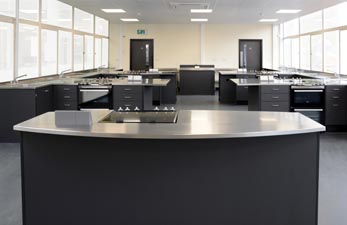
Food Technology rooms play a vital role in school life. They are the spaces where students learn the principles of healthy eating, build confidence in cooking and develop practical skills they will use for life.
A well-planned room does more than look impressive. It supports demonstration, supervision, movement, storage, hygiene and classroom management. It can also help schools raise the profile of Food Technology as an inspiring and valuable subject.
👉 You can learn more about our approach here:
Food Technology Room Design
Why Food Technology Classrooms Matter in Schools
Food Technology is about far more than recipe-making. It helps students understand nutrition, food safety, healthy eating and the practical skills needed to prepare meals with confidence.
For teachers, the classroom needs to support both theory and hands-on learning. Students may move from discussing nutrition guidance to preparing ingredients, cooking and evaluating outcomes all in one lesson.
A well-designed classroom helps to:
- Demonstrate healthy cooking techniques clearly
- Encourage participation from all students
- Reinforce hygiene and food safety practices
- Support curriculum requirements around nutrition
👉 Many teachers share ideas and best practice through the Food Teachers Centre UK:
https://www.facebook.com/groups/foodteacherscentre
What Makes a Good Food Technology Teaching Facility?
A successful food technology room balances functionality, safety and inspiration.
Key features include:
- Enough cooking stations for all students
- Clear teacher demonstration areas
- Safe spacing around cookers and sinks
- A layout that supports both practical and theory work
- Durable, easy-to-clean materials
- Effective ventilation and temperature control
Well-designed spaces reduce disruption, improve behaviour and allow teachers to focus on delivering high-quality lessons.
How Many Students Should the Food Technology Room Support?
One of the most common planning questions is how many pupils the room should accommodate.
Typical guidance:
- Around 20–24 students per room
- 1 cooking station for every 2 pupils
- Ideally 100–110m² of space (smaller spaces can be made to work if required)
Designing for the correct capacity helps maintain safety, supervision and smooth lesson flow.
Should Food Technology Theory and Practical Areas Be Separate?
This depends on the space available and teaching preferences.
Combined spaces:
- Make efficient use of space
- More cost effective
- Enable quick transitions between theory and practical
Separate areas:
- Improve focus during written work
- Reduce distraction during theory lessons
- Provide more flexibility
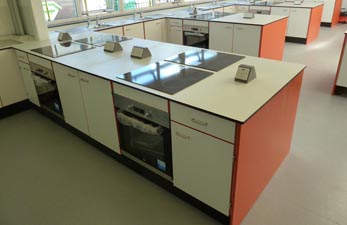
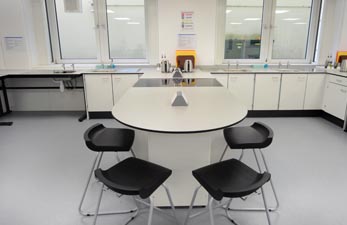
Some schools opt for free standing tables positioned at the end of the peninsulas that can be used for practical lessons but could be re-positioned for theory lessons if required.
Which Layout Works Best for Food Technology?
Popular layout options include:
- Peninsula layouts – maximise space and allow easy movement
- Island layouts – ideal for demonstrations and engagement
- Pod layouts – encourage teamwork and create a “wow factor”
- Perimeter layouts – cost-effective for smaller rooms
The optimum layout will depend on a number of different factors including the dimensions of the room, budget constraints and how teachers deliver lessons.
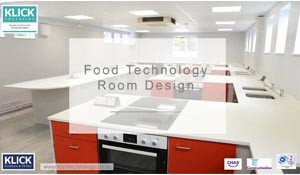
View Our Guide For Further Details on Room Layouts and All Aspects of Food Technology Room Design
What Equipment Should a Food Tech Classroom Include?
A well-equipped classroom should include:
- Cookers (1 per 2 students)
- Sinks with safe working space
- Teacher demonstration bench
- Fridges and ingredient storage
- Dry storage for equipment
- Storage for bags and coats
- Adequate power supply
- Ventilation and extraction
Planning these elements early helps avoid costly changes later.
How Important is Safety for Food Technology rooms?
Safety should be built into the design from the start.
Important considerations:
- Safe distances around appliances
- Clear walkways and supervision lines
- ‘Put down’ space beside hobs
- Adequate ventilation and temperature control
A well-designed classroom supports confident teaching and reduces risk.
How Should Storage Be Planned for a Food Technology Room?
Storage is often underestimated but essential.
You will need:
- Space for ingredients brought in by pupils
- Fridges and dry goods storage
- Equipment storage
- Separate areas for bags and coats
Locating a storage area near the entrance helps minimise disruption during lessons as it allows students to drop off ingredients and collect finished items without disturbing classes.
Creating a ‘Wow Factor’ Food Tech Classroom
A well-designed food technology room should be practical but also inspiring.
👉 Example project:
This project transformed an outdated ICT room into a modern food technology space. The design included a large teacher demonstration bench, Velstone worktops, improved storage and upgraded services.
The result was a contemporary, high-quality classroom that improved both teaching and student engagement.
Click here for full case study details
Why Work with a Specialist School Food Technology Supplier?
Food Technology classrooms have complex requirements, including layout, services, ventilation and durability.
Working with a specialist ensures:
- Experience in school environments
- Proper planning of power, plumbing and extraction
- Efficient project management
- Minimal disruption to teaching
Testimonial
“Klick made the refurbishment process very easy. Their contracts manager kept me well informed about each stage of the project and the communication with their team was brilliant. Their fitters worked to a high standard and were really reliable. The food technology room is now a smart and practical facility which is the pride of the teaching staff and pupils.”
Cath Wallace – Business Development Director, Corpus Christi Catholic High School, Preston
❓ Food Technology Classroom Design FAQs
What is a food technology classroom?
A specialist teaching space where students learn cooking, nutrition and food preparation skills in a practical environment.
How many students can a food technology room hold?
Typically 20–24 students, with one cooking station for every two pupils.
What size should a food tech classroom be?
Around 110 square metres is recommended for a standard secondary school class for 24 students.
What are the key food technology safety features?
Safe spacing, ventilation, clear supervision and compliance with school design guidelines.
How can design improve student engagement in food technology lessons?
An organised and inspiring classroom encourages participation, reduces disruption and supports practical learning.
Planning a Food Technology Room Upgrade?
If you are planning a new Food Technology room or refurbishing an existing space, a well-considered design can make a significant difference to teaching, safety and student engagement.
Please call 0161 998 9726 to discuss your project or contact us by email to arrange a consultation.
👉 Learn more about our food technology room refurbishment services