


19 Feb School Science Lab Design Through the Decades
Over the last 100 years, school science laboratories have transformed dramatically. From fixed hardwood benches and teacher-led demonstrations to today’s flexible, technology-enabled STEM environments, school science lab design and refurbishment has continually evolved alongside education itself.
How are modern school science labs designed today?
While school science laboratories have evolved dramatically over the past century, today’s design process is more considered, collaborative and future-focused than ever before.
In this short video, we explore the key considerations that shape contemporary school science lab design — from curriculum requirements and safety standards to flexibility, sustainability and integrated technology.
Understanding how today’s laboratories are designed provides valuable context for appreciating just how far school science environments have come.
Let’s take a closer look at how school science laboratories have transformed over the last 100 years.
Science Lab Design: From Timber Benches to Modern STEM Labs
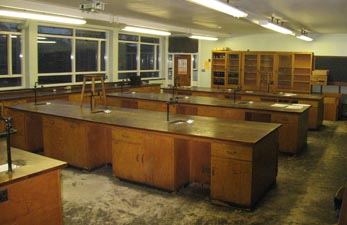
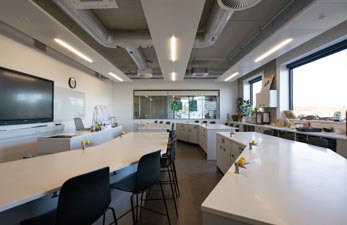
Changes in curriculum, safety regulations, materials and teaching methods have all influenced how laboratories are planned and built. An understanding of this evolution helps schools make better decisions when investing in modern, future-ready science facilities.
At Klick, we’ve experienced this progression first-hand — and in some cases, have returned decades later to refurbish laboratories we originally installed.
Early 20th Century Lab Design: Fixed Benches & Timber Worktops
In the early 1900s, school science labs were formal, structured environments. Typical features included:
- Fixed wooden benches (often solid hardwood such as Iroko)
- Minimal ventilation systems
- Teacher-focused demonstration layouts
Practical science was present, but flexibility was not a design priority. Storage was limited, and chemical resistance of surfaces was far less advanced than modern standards require.
While solid hardwood provided durability, it did not offer the chemical protection or adaptability expected in contemporary school laboratory design.
Post-War Expansion: Focus on Practical Science Lab Design
From the 1950s through to the 1970s, science education expanded rapidly across the UK. Schools invested in purpose-built laboratories designed to support increased student participation.
During this period, science laboratories typically included:
- Improved plumbing and electrical systems
- Gas taps became more standard in secondary science classrooms
- Dedicated preparation rooms
- Larger practical work areas
- Standardised bench layouts
Many laboratories installed during this era remained unchanged for decades. While robust, these fixed layouts often lacked the flexibility required by modern STEM teaching.
A 1960s Lab Reimagined: Science Laboratory Refurbishment in Action
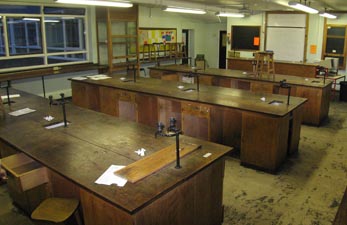
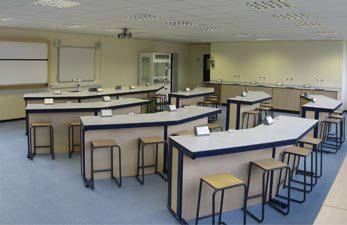
In 2007, we were commissioned to completely redesign and refurbish a 40-year-old science laboratory at St Ambrose College, Altrincham which dated from the 1960s.
This science laboratory refurbishment project involved:
- Full strip-out of the existing lab
- Removal of an outdated fitted fume cupboard
- Installation of new laboratory furniture
- Upgraded plumbing and electrical services
- New ceilings, lighting, flooring and decoration
- Reconfigured layout to maximise teaching focus
The refurbishment modernised the space to meet contemporary curriculum standards while minimising disruption during term-time.
This project illustrates how older school laboratories can be successfully upgraded to support modern STEM teaching.
Laboratory Worktop Design: From Iroko to Engineered Surfaces
One of the clearest indicators of progress in school lab design is the development of laboratory work surfaces.
Historically, solid Iroko hardwood benches were common. While durable, they offered limited chemical resistance and required regular maintenance.
Today, engineered surfaces such as Trespa high-performance laboratory worktops and Velstone solid surface worktops provide:
- Superior chemical resistance
- Impact and scratch durability
- Moisture protection
- Long-term structural stability
- Reduced maintenance requirements
Modern worktops for laboratory environments are designed specifically for education settings, offering significantly improved performance compared to traditional timber surfaces.
This shift reflects broader advances in laboratory furniture systems and material technology.
The 1980s–1990s Science Lab Design: Safety & Compliance
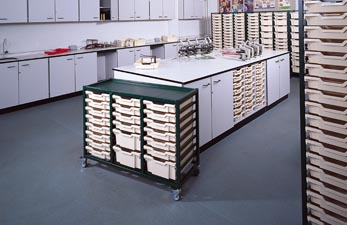
By the 1980s and 1990s, laboratory safety standards had become significantly more rigorous. Regulations such as COSHH (Control of Substances Hazardous to Health), introduced and enforced by the UK’s Health and Safety Executive (HSE), began to directly influence how school science laboratories were designed and managed.
Design priorities shifted to include:
- Safer chemical storage systems
- Improved ventilation and fume cupboards
- Clear teacher sightlines for supervision
- Better zoning between practical and demonstration areas
Modular benching systems began to replace fully fixed layouts, allowing for more adaptable teaching configurations. Health and safety was no longer secondary — it became fundamental to effective laboratory planning.
This era marked a critical shift. School lab design moved beyond simple functionality and began balancing safety, flexibility and educational performance.
1996 to 2024: A Return to Holly Lodge Girls’ School
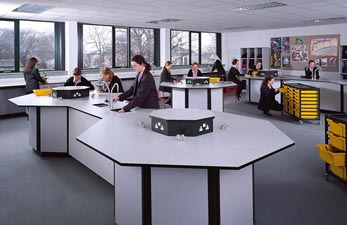
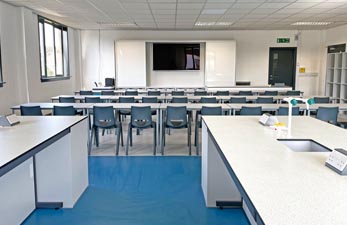
In 1996, Klick completed a major science department installation at Holly Lodge Girls’ School in Liverpool.
At the time, octagonal bench layouts were popular, encouraging structured group work. Nearly three decades later, in September 2024, we were invited back to refurbish those original laboratories.
You can read more about the recent refurbishment here:
👉 https://klicktechnology.co.uk/school-science-lab-refurbishment-hl/
Testimonial
“At the early stages, during site visits, we were impressed with Klick’s level of experience. Their consultants listened carefully and immediately understood the practicalities of what was involved. They made valuable suggestions on how to plan the rooms and provided CAD drawings to illustrate the options.
All the planning paid off and we developed a fantastic working relationship with Klick. The teachers are thrilled with the finished rooms and the new labs offer vastly improved teaching facilities.”
Mark McHugh – Estates Manager, Holly Lodge Girls College, Liverpool
Although the octagon layout at Holly Lodge had become outdated in terms of flexibility, the laboratories themselves remained in remarkably good condition — demonstrating the value of investing in high-quality school science laboratory furniture. The 2024 refurbishment modernised layouts, improved storage efficiency and enhanced adaptability, aligning the science department with contemporary teaching methods.
Some of our current team members had worked on the original 1996 project — a rare example of long-term continuity in the laboratory design sector.
Enduring Principles in School Science Lab Design
While layouts and materials have evolved, the core objectives of school lab design remain consistent.
Effective science laboratories must:
- Enable safe experimentation
- Provide clear teacher visibility
- Offer durable and practical workspaces
- Incorporate efficient storage
- Support heavy daily use
What has changed is how these objectives are achieved.
Modern STEM laboratory design integrates modular furniture, engineered surfaces and compliance-driven planning to deliver safer, more adaptable environments than ever before.
Today’s Laboratory Design Focus: Flexibility, Storage & Inclusivity
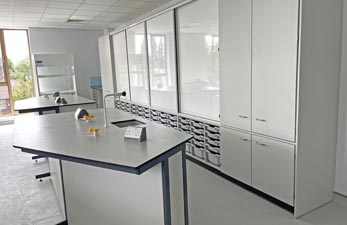
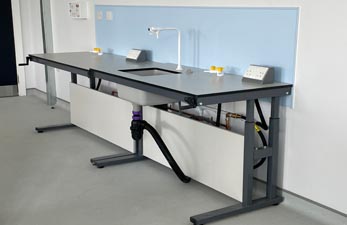
Contemporary school science lab refurbishment projects now extend far beyond updating furniture and finishes. Modern laboratory environments must balance flexibility, durability and accessibility.
In addition to modular layouts and improved storage wall systems, inclusivity has become an essential design consideration. Under the principles of the UK’s Equality Act 2010, schools are required to ensure that learning environments are accessible to all students.
As a result, modern science lab design increasingly incorporates:
- DDA-compliant bench heights
- Improved circulation space
- Accessible storage systems
- Flexible layouts to support collaborative learning
👉 You can explore examples of recent school science lab case studies here.
These installations demonstrate how thoughtful planning improves functionality, safety and long-term adaptability.
Designing the Next Generation of School Science Laboratories
The evolution of school lab design reflects changing educational needs, advancing material technology and higher safety standards.
From timber worktops to engineered composite surfaces, from fixed octagon layouts to flexible STEM environments, science laboratory design continues to adapt.
If you’re considering a school science lab upgrade or refurbishment the following frequently asked questions address common queries about laboratory design, costs and materials.
School Science Laboratory Design FAQs
What does school science lab design include?
School lab design typically includes layout planning, laboratory furniture selection, worktop specification, ventilation and fume extraction, plumbing and electrical services, storage solutions and compliance with health and safety regulations. Modern STEM laboratory design also prioritises flexibility and inclusivity.
How much does a school lab refurbishment cost in the UK?
The cost of a school science lab refurbishment depends on the size of the laboratory, the extent of structural changes required and the specification of furniture and surfaces. Projects can range from partial upgrades to full laboratory fit-outs tailored to curriculum needs. All our case studies detail project values and provide a cross section of project scopes and costs.
What are the most durable worktops for school science labs?
Modern school laboratories commonly use engineered solid grade laminate surfaces such as Trespa. These provide superior chemical resistance, moisture protection and durability compared to traditional hardwood worktops.
How can school science labs be designed for inclusivity?
Inclusive lab design for schools can include DDA-compliant bench heights, accessible storage systems, improved circulation space and flexible layouts that support collaborative learning for all students.
From 1960s timber worktops to modern engineered surfaces, and from fixed octagon layouts to adaptable STEM environments, the design of school laboratories has continuously progressed.
And sometimes, the strongest evidence of thoughtful design is being invited back — decades later — to build the next chapter.
If you are planning a refurbishment or new lab installation you can click here to learn more about our approach to school science lab design. Please call 0161 998 9726 or contact us by email to have a chat about your plans.
Sources:-
COSHH (Control of Substances Hazardous to Health) – https://www.hse.gov.uk/coshh/
Equality Act 2010 – https://www.legislation.gov.uk/ukpga/2010/15/contents