


12 Jan Lab Design for Expansion: Efficient Workflows & Mezzanines
When laboratories reach capacity, many organisations assume the only solution is to move to a larger building. But with the right design principles—and smart use of vertical space—your existing facility may hold far more potential than you think.
Thoughtful lab design, workflow optimisation and the strategic use of mezzanine floors can unlock significant new capacity while maintaining operational efficiency.
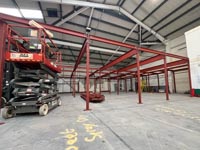
Our 40-second timelapse video below showcases the initial stages of mezzanine floor construction — from site setup through to the preparation of the perimeter walls.
Principles of Effective Laboratory Design
Before adding physical space, it’s essential to optimise how your laboratory functions. Good design goes far beyond choosing lab furniture—it shapes how people work, move and collaborate.
Key laboratory design principles include:
Separating clean, write-up, analytical, prep and storage zones reduces contamination risks and streamlines daily activity. Proper zoning ensures every square metre is used purposefully.
2. Intuitive Layouts & Workflow
Efficient workflows reduce wasted movement and prevent bottlenecks. This can include:
- Logical equipment placement
- Clear pathways
- Adequate bench depth & working clearances
- Proximity between dependent processes
3. Flexibility & Future-Proofing
Modular systems, mobile workstations and adaptable services allow labs to evolve as teams grow or techniques change.
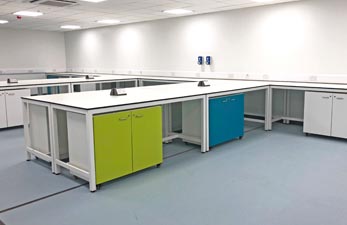
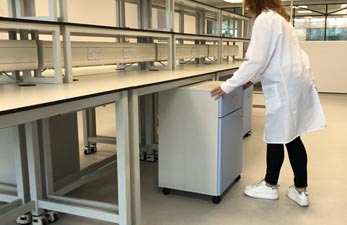
Behind every good laboratory layout is careful planning of power, data, HVAC, gases and drainage. Ideally these services should be optimised—not retrofitted—to support efficient science.
By getting the fundamentals right, organisations often discover they already have more room than expected… and that expansion is possible without relocation.
However effective laboratory design isn’t just about space and efficiency — it also plays a critical role in enabling interdisciplinary collaboration and scientific innovation. As noted by Lab Design News, flexible laboratory layouts that support multiple modes of work help break down silos between disciplines and unlock new research possibilities. By designing spaces that adapt to evolving needs, organisations can future‑proof their scientific facilities and promote collaboration at every level.
When Your Lab Outgrows Its Footprint and Needs a Re-Design
Space pressure builds gradually. You may notice issues such as:
- Reduced bench availability
- Overcrowded equipment areas
- Limited specialist spaces (e.g. QC, analytical, microbiology)
- Storage spilling into unsuitable areas
- Inefficient workflows due to cramped layouts
At this stage, organisations typically consider two options:
1. Internal expansion (reconfiguring or extending within the existing building)
2. Relocating to a larger site
Internal expansion—particularly vertical expansion using a mezzanine—can often deliver the extra space needed at a fraction of the cost of moving.
Why Mezzanine Floors Are a Game-Changer for Lab Expansion
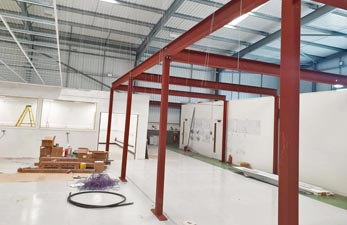
A mezzanine floor is one of the most effective ways to unlock additional capacity within an existing building. It turns unused vertical space into high-value laboratory, breakout, office or storage areas.
Benefits of mezzanine floors in laboratory environments:
✔ Increases usable space without expanding the external footprint
✔ Avoids the financial and logistical burden of relocation
✔ Ideal for laboratories, technical offices, breakout areas or storage of materials
✔ Supports future expansion by adding structural and services capacity
Mezzanine structures can be engineered to support significant loads, including heavy analytical equipment.
How Mezzanine Floors Help to Maximise Laboratory Space
Below, we explore how Klick transformed two major laboratory expansion projects for JPL Flavours and Biofortuna, creating additional space by installing mezzanine floors.
Case Study: Maximising Laboratory Space at JPL Flavours
JPL Flavours commissioned Klick to create a modern 75,000 sq ft, high-capacity technical facility within an existing warehouse.
Key challenges:
- Converting a warehouse into multi-floor laboratories
- Coordinating the installation of large-scale manufacturing equipment
- Creating 16 purpose-built labs, including analytical, QC, beverage, sweet and savoury applications
- Designing a mezzanine structure to accommodate technical lab spaces with the appropriate services and HVAC
- Construction of fire rated steel structure – conforming to CDM access & fire escape regulations
How mezzanine design supported expansion:
- The mezzanine allowed JPL’s operations to be consolidated into a single, modern HQ
- The new mezzanine structure was constructed to create additional lab and office space with the flexibility for further expansion of employee numbers
The layout was designed around workflow efficiency, zoning and flexible use and the result is a future-ready technical environment supporting flavour development, customer collaboration and rapid production capability.
Case Study: Biofortuna – Vertical Expansion Increases Space
Biofortuna Ltd needed to significantly increase laboratory capacity to support their expanding diagnostics and manufacturing operations. Klick explored how to maximise the building’s existing footprint.
Project highlights:
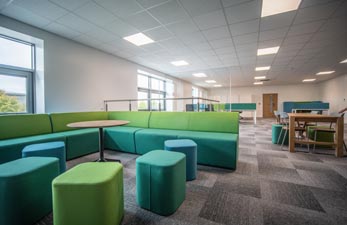
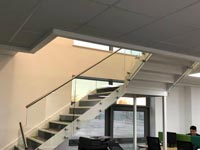
- A full mezzanine floor was designed and installed to create new office and breakout space
- Structural loading was engineered to accommodate the mezzanine above an additional office space
- Two new staircases were designed and installed to provide access from the reception area and an emergency fire escape
The mezzanine solution delivered immediate space for collaboration and offices with the flexibility of long-term scalability, allowing Biofortuna to expand in line with future demand.
Final Thoughts: Designing Laboratories for Growth
Whether you’re a research facility, industrial manufacturer or biotech organisation, thoughtful laboratory design and the strategic use of mezzanine floors can radically reshape how you use your building.
By focusing on workflow efficiency, zoning and adaptable infrastructure, you can create a facility that supports growth today—and long into the future.
If you’d like help assessing how your building could accommodate additional laboratories or specialist spaces, the Klick team would be delighted to discuss your options.
Why Partner with Klick?
With over 40 years of experience, Klick delivers expertly crafted laboratory environments with attention to every technical and functional detail. From concept to installation, we bring innovation, practicality and long-term value to your lab.
Ready to upgrade your lab? Contact us today to discuss your laboratory design project or explore our recent case studies for inspiration.
Sources and Further Reading
Lab Design News – https://www.labdesignnews.com/content/fostering-interdisciplinary-research-how-flexible-design-unlocks-the-future-of-science