


19 Mar 8 Laboratory Fit Out Mistakes to Avoid | Lab Design Guide UK
Designing and delivering a successful laboratory fit out requires careful planning, specialist expertise and a clear understanding of the end user’s needs. Whether creating a new research facility or upgrading an existing space, laboratory projects are far more complex than standard commercial interiors.
From specialist ventilation systems to laboratory furniture and services infrastructure, there are many factors that can affect safety, efficiency and long-term performance.
Over the years, our team at Klick Laboratories has worked with universities, research organisations and commercial laboratories to deliver high-quality laboratory environments. In that time, we’ve also seen how certain mistakes can create costly challenges during and after a project.
Common Laboratory Fit Out Mistakes and How to Avoid Them
1. Poor Laboratory Ventilation and Environmental Control
Laboratory ventilation systems play a critical role in maintaining safe working environments and supporting sensitive research processes.
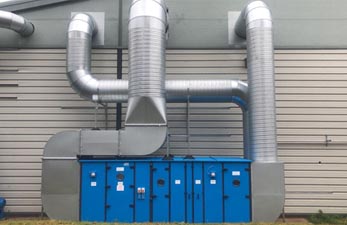
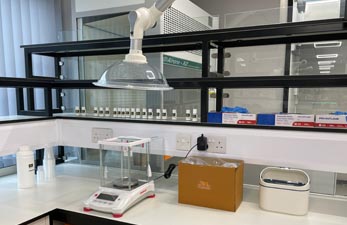
Inadequate HVAC (heating, ventilation and air conditioning) design can affect air quality, safety compliance and even experimental results. Guidance from the Health and Safety Executive highlights the importance of effective ventilation control to prevent exposure to hazardous substances under COSHH regulations.
How to avoid it
- Design ventilation systems specifically for laboratory use
- Ensure adequate extraction and air change rates
- Integrate HVAC planning with the overall laboratory layout
- Allow enough external space for the HVAC plant to be sited
Fit Out of Ventilation for Food Manufacturing Laboratories
In food manufacturing environments it’s important to determine the correct specification of HVAC to provide the appropriate number of air changes per hour for the specific laboratory dimensions and activities. This helps resolve the problem of unpleasant gases and stagnant smells.
2. Lack of Early Contractor Involvement
Laboratory projects benefit significantly from early collaboration between designers, specialist laboratory contractors and end users. Without early contractor input, technical issues may be overlooked and challenges may only become apparent during construction.
How to avoid it
Fit Out Requirements for Specialist Engineering Laboratory
Early design involvement by Klick identified an issue with a proposed aluminium prefabricated building that was to be bolted together to provide laboratory space. A contractor that was not a lab specialist thought this construction method would be appropriate however:-
- The client required pressurised labs and with this construction method the walls would not be sufficiently structurally sound to provide a sealed environment
- The aluminium building would not have been appropriately fire rated
- The section spans would have been too small. One of the labs required 3 fume cupboards and a bigger footprint than had been allowed
If these structural limitations had not been identified before lab construction began costly redesigns would have been required.
3. Poor Laboratory Space Planning
One of the most common issues in laboratory projects is inefficient space planning. If laboratory layouts are not carefully designed around workflow and equipment requirements, the result can be cramped working conditions, inefficient processes and limited capacity.
A well-designed laboratory should support the natural flow of people, samples and materials through the space. When laboratories grow organically over time without a strategic redesign, workspaces can quickly become overcrowded and difficult to use effectively.
Best practice guidance from the Royal Society of Chemistry emphasises that laboratory layouts should be designed around safe workflows, clear zoning and adequate space.
Example from industry
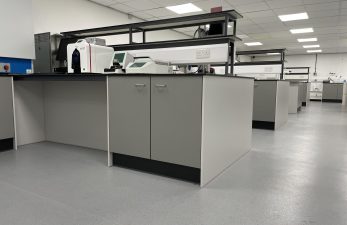
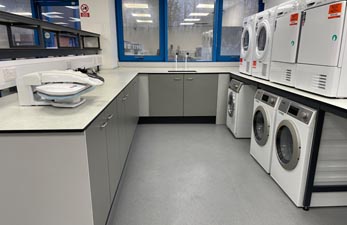
In one project we encountered, for a manufacturer of specialist textile dyes, their laboratory had originally been designed for a small team but had gradually expanded as the business grew. Over time the space became cluttered, with several staff members working in close proximity and limited room for equipment or new processes.
Through a detailed consultation process with the laboratory team, the redesign focused on improving both workflow and usability. By reconfiguring the space and converting adjacent office space into additional laboratory area, the team were able to create individual workstations for laboratory staff, a dedicated zone for quality control activities and a separate area for all the white goods required for wash testing.
The result was a far more efficient environment that could comfortably support a much larger team while improving workflow, productivity and staff morale.
Testimonial
“Our existing lab was designed for 3 staff and had become outdated and cramped as the team had expanded over time…. Their design team took on board all our requests and came up with a layout that utilises the space well, with dedicated workstations for up to 10 lab staff. Klick collaborated closely with the project team and there was a good flow of communication to all our staff.
We have just started working in the refurbished lab and there has been a definite improvement in staff morale. The new set up will allow us to create additional product lines which ultimately means the company can expand into new product areas. Thanks to everyone involved!”
Freya Wharton – Technology Group Lead – Innovation
How to avoid it
- Analyse laboratory workflows early in the design process
- Allow adequate circulation space around equipment
- Create dedicated zones for different laboratory functions such as preparation, testing and write-up
- Ensure the design can accommodate future team growth
4. Underestimating Laboratory Services Requirements
Laboratories rely heavily on specialist services such as gas systems, electrical power, data connections and ventilation. Underestimating these requirements can lead to expensive retrofitting once the laboratory is operational.
How to avoid it
- Engage laboratory designers early in the planning process
- Identify equipment specifications and service requirements in advance
- Ensure infrastructure allows for future expansion
Underestimated Resources for Environmental Testing Lab
An example we came across recently was for a leading provider of hazardous material testing, surveying, and environmental consultancy services. Klick was asked to extend their lab facility and resolve technical issues with their ventilation installed by a previous contractor.
The fume cupboards they had initially specified required more mechanical air than they had allowed. This meant an air curtain and HVAC system needed to be retrofitted which was significantly more expensive than if it had been correctly specified when the fume cupboards were originally installed.
5. Research Facilities Lacking Space for Lab Expansion
Laboratory technology and research programmes can evolve rapidly. Facilities that are designed only for current requirements may struggle to accommodate future equipment, new processes or expanding teams.
In some organisations, laboratory space has developed on an ad hoc basis as the company grows. This can result in laboratories being spread across multiple locations or buildings, creating inefficiencies where samples and materials must be transported between different areas to complete processes.
Rigid layouts and fixed services can also limit the ability to introduce new equipment or modify laboratory workflows.
How to avoid it
- Design flexible laboratory layouts that can evolve with research needs
- Use modular furniture systems that can be reconfigured easily
- Install adaptable service distribution for future equipment
- Plan laboratory space with long-term organisational growth in mind
Example from industry
One organisation we worked with had experienced rapid growth since its formation and had gradually expanded laboratory operations across several separate buildings. While this approach worked in the early stages of the company’s development, it eventually created challenges for collaboration and efficiency.
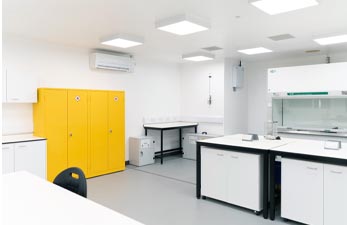
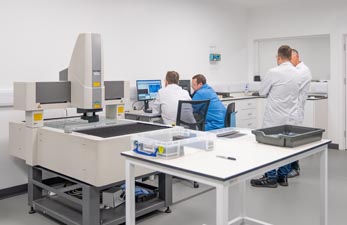
A new state-of-the-art facility was designed to bring laboratory teams together in one purpose-built location. This significantly increased the available lab space whilst the use of modular furniture and mobile cabinets also allowed for flexibility and future expansion. The project created modern research laboratories that enable internal teams to collaborate more effectively on product development.
This laboratory fit out delivered a flexible environment with capacity for growth, so the organisation now has a scalable laboratory facility capable of supporting continued innovation for many years.
6. Choosing the Wrong Laboratory Furniture
Laboratory furniture must withstand demanding environments, including chemical exposure, heavy equipment and intensive daily use. Selecting inappropriate materials can lead to rapid wear, safety risks and costly replacements.
How to avoid it
- Choose durable, chemical-resistant materials
- Ensure laboratory furniture meets relevant standards
- Consider long-term performance rather than initial cost
Industry Example of Inappropriate Laboratory Furniture
In a lab environment where steam cleaning is required it is essential to specify appropriate materials. MFC would not stand up to regular intensive cleaning and it would be necessary to construct doors and end panels from laminated MDF or ideally Trespa.
7. Inadequate Storage Solutions
Storage is often overlooked in early laboratory design stages. However, laboratories require dedicated storage for chemicals, consumables, equipment and waste. Insufficient storage can lead to cluttered workspaces and safety risks.
How to avoid it
- Plan chemical storage carefully
- Include appropriate cabinets and secure storage areas
- Consider waste management and hazardous materials
Storage Solutions for Laboratory Fit Out Projects
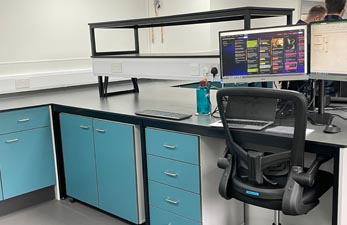
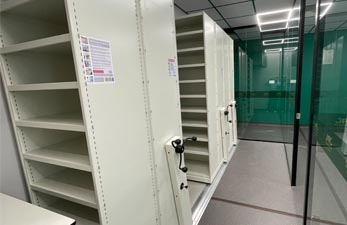
Systemised storage can transform the efficiency of a laboratory. In a recent project Klick fitted Trespa reagent shelving to provide chemical /moisture resistance and easy access to frequently used items. Bays of roller racking provide extensive storage for the samples and ingredients required for the lab technicians.
8. Poor Project Scheduling
Laboratory fit-out projects often involve coordination between multiple specialist suppliers, equipment installers and contractors. Without careful scheduling and communication, this complexity can lead to delays or disruption to ongoing operations.
In many cases, laboratory refurbishment work must take place while other areas of the building remain operational, which adds an additional layer of logistical challenge.
How to Plan a Successful Laboratory Fit Out Project
In one recent refurbishment project, the laboratory was located on the first floor of a building accessed through a busy sales office that needed to remain operational throughout the construction works.
To minimise disruption, the project required careful phasing and close communication with the client’s team. Delivery schedules were coordinated in advance, noise levels were carefully managed during office hours and temporary partitions were retained during the works to reduce disturbance to office staff working nearby.
Despite the challenging environment and a tight programme, careful planning and communication ensured the project progressed smoothly and was completed ahead of schedule.
How to avoid it
- Develop a clear and realistic project programme
- Coordinate the installation of laboratory services and equipment carefully
- Communicate regularly with all stakeholders throughout the project
- Work with experienced laboratory project managers who understand operational constraints
“There were challenging conditions as the lab is attached to a working office but sincerely, the delivery from Klick, from concept to completion has been outstanding and we can’t wait to show off the new labs to our clients. To be honest, I was doubtful about whether Klick could achieve the timeline however they were one day ahead of schedule so in my eyes, they’ve overachieved!”
Dave Ditcham, General Manager, Bevie, Ellesmere Port
Frequently Asked Questions About Laboratory Fit-Outs
What is included in a laboratory fit-out?
A laboratory fit-out typically includes laboratory design, installation of specialist furniture, gas and electrical services, ventilation systems, storage solutions and safety infrastructure such as fume cupboards and extraction systems.
How long does a laboratory fit-out take?
The timeline depends on the scale and complexity of the project. Smaller laboratory refurbishments may take a few weeks, while full laboratory design and fit-out projects can take several months including planning, construction and commissioning. For further information on timescales all our lab fit out case studies feature details of the project duration.
What are the most important factors in laboratory design?
Key considerations include laboratory workflow, ventilation systems, services infrastructure, safety compliance, equipment requirements and the flexibility to accommodate future research needs.
How can laboratories be designed for future expansion?
Flexible laboratory layouts incorporating mobile lab furniture, modular furniture systems and adaptable service distribution can allow laboratories to accommodate new equipment and changing research programmes.
Final Thoughts
A successful lab fit out requires more than simply installing furniture and equipment. It demands careful planning, specialist expertise and a deep understanding of laboratory workflows, safety requirements and future flexibility.
By avoiding these common mistakes, organisations can create laboratory environments that support productivity, safety and innovation for many years to come.
If you are planning a new laboratory or refurbishment project, working with experienced laboratory design and fit-out specialists can help ensure the process runs smoothly from concept through to completion.
If you would like advice on a lab fit out project please call 0161 998 9726 or contact us by email today.
Sources and Further Reading
Health and Safety Executive – https://www.hse.gov.uk/ventilation/
COSHH – https://www.hse.gov.uk/coshh/basics/overview.htm
Royal Society of Chemistry https://books.rsc.org/books/edited-volume/907/chapter-abstract/698741/Health-and-Safety-Considerations-in-the-Design-of